Redesigning trust into a global e-ballot platform.
A complete UX/UI redesign of an established election-management system—grounded in customer feedback, stakeholder input, competitor research, iterative prototyping, and hands-on front-end implementation.
The problem
The Election Manager had grown into a capable but dated interface. Its visual age and fragmented workflows were affecting usability and customer confidence in a platform where trust is fundamental.
Feedback revealed recurring confusion around scheduling email blasts, finding renewal information, editing questions and options, previewing ballots, navigating back to election overviews, starting or ending elections, downloading data, and understanding published states.
Because the system served organizations across multiple countries and regions, the redesign also had to respect complex permissions, election states, time zones, and established user behaviour—not simply make the interface look newer.
What I built
- Collected and organized customer pain points and stakeholder feedback into a structured research backlog.
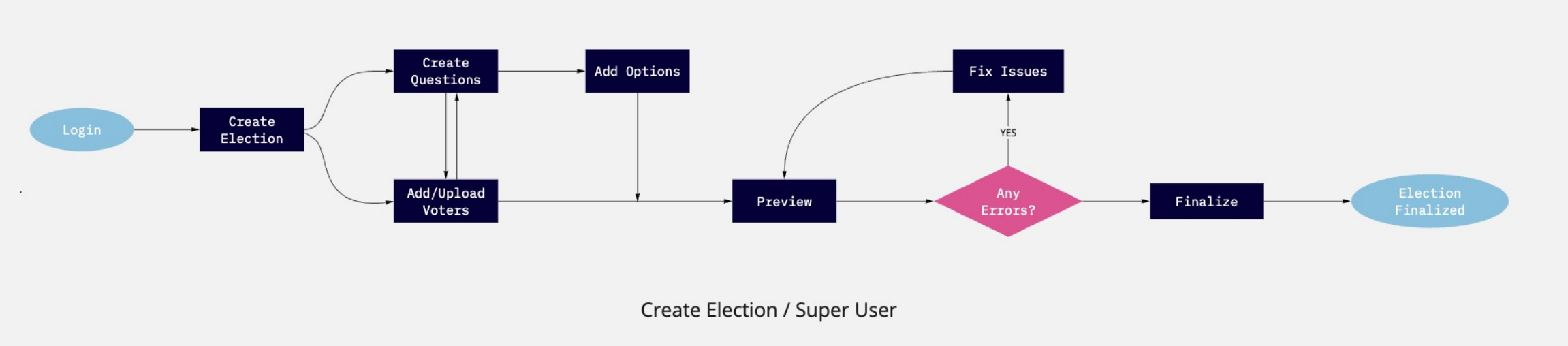
- Mapped the complete election-management journey across election setup, electors, questions, finalization, email delivery, bounce handling, reports, results, logs, files, users, permissions, billing, and settings.
- Reviewed competing election products to benchmark dashboards, navigation, CSV mapping, preview behaviour, guided setup, status filtering, time-zone selection, and in-product help.
- Moved from sketches and low-fidelity flows into stakeholder-reviewed, high-fidelity mockups, then translated the approved experience into a responsive Tailwind-based interface.
From flow to interface.
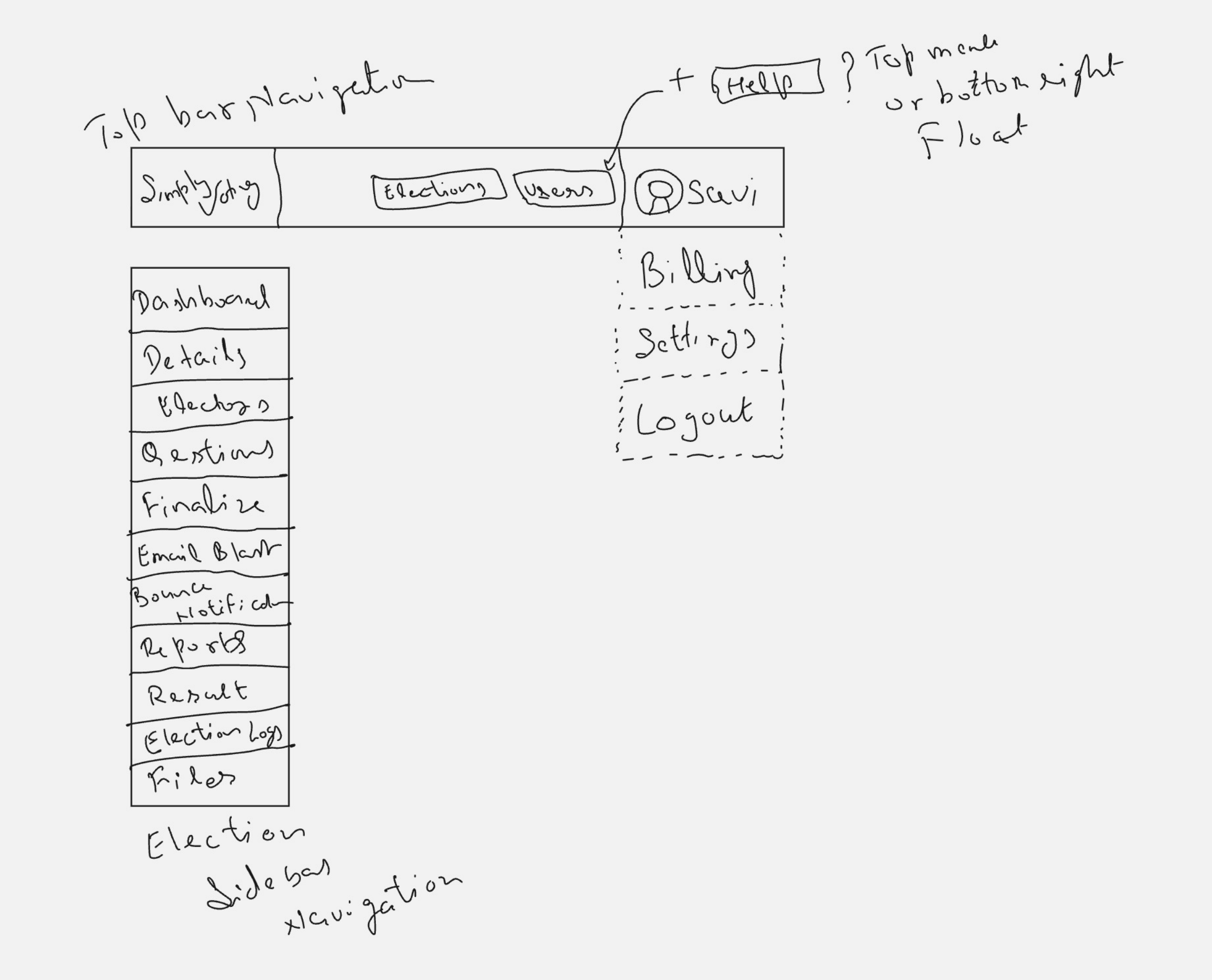
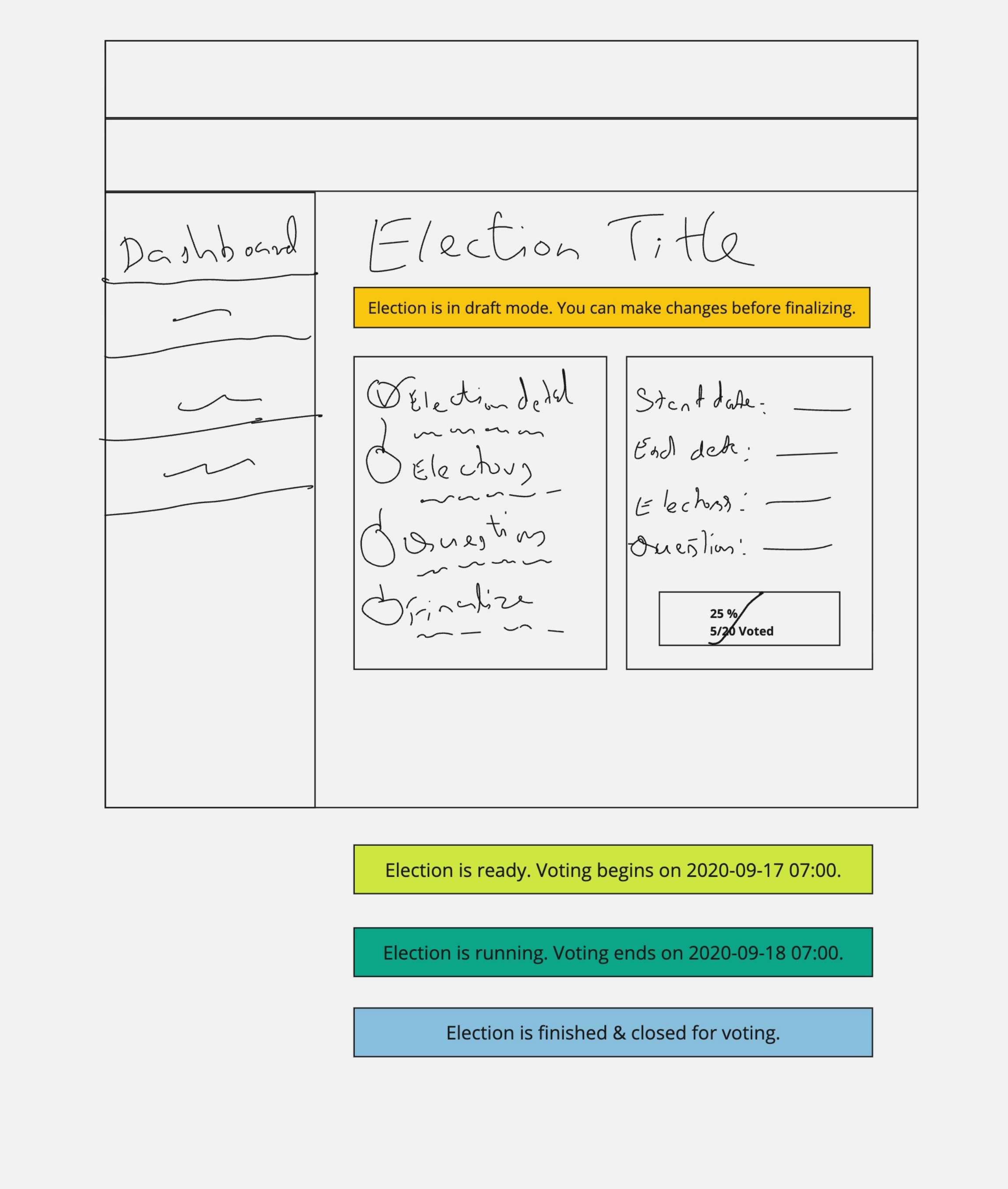
Selected early artifacts shared during the client review process. These are intentionally rough: their job was to make assumptions visible, invite feedback, and align the team before high-fidelity design.
The key decision
I treated the work as a workflow and information-architecture redesign rather than a cosmetic reskin. The new direction made election-scoped navigation explicit, surfaced a guided setup checklist, clarified action hierarchy and system status, and kept preview and next-step actions visible so administrators could understand where they were and what remained before launch.
Result
The redesigned experience made the platform easier to learn and operate, strengthened the sense of trust and product maturity, and contributed to SimplyVoting's ability to serve and grow with more organizations across multiple regions.
What this proves
- End-to-end product design ownership: research, synthesis, competitive analysis, user flows, prototyping, stakeholder iteration, and production implementation.
- The ability to modernize a complex, established business platform without ignoring its domain rules or existing users.
Internal customer comments, stakeholder documents, interface screens, and specific growth figures are not published. The process and responsibilities are presented at a non-confidential level.